Objective
Find out how exposed school sanitation in Patongo is to floods, drought and wind, and help schools act on the risks.
The assessment
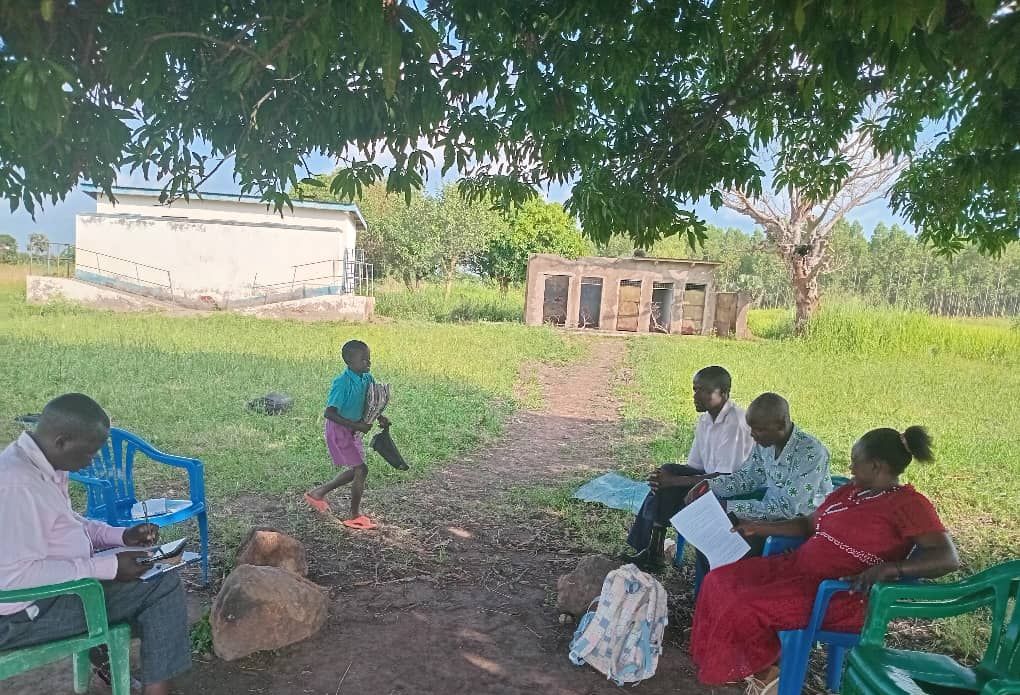
Between 3 and 5 February 2025, with support from the Roddenberry Foundation, NETWAS Uganda assessed the sanitation systems of nine primary and nursery schools in Patongo Town Council, using a climate risk and vulnerability tool on mWater. The main findings:
- None of the nine schools had a sanitation system that was both safe and climate-resilient.
- Only one school had a handwashing station, and none always had soap and water.
- Eight of nine schools disposed of waste by open dumping.
- The three schools on flood-prone land all had latrine pits that overflowed in the rains.
- Six of nine schools gave the lowest possible rating for access for learners with disabilities.
- Two large schools, holding half of the learners assessed, were ranked at very high risk.
Download the full report (PDF)
Acting on the findings
Teachers were trained in sanitation safety planning, so that each school could manage the risks along its own sanitation chain. In June 2025, NETWAS documented the changes at Patongo Primary and Moodege Primary schools. Read the story.
Results
A published climate risk assessment ranking all nine schools, with immediate, medium- and long-term actions; teachers trained in sanitation safety planning; practical improvements documented at two schools.
Stories
-
After the risk check: how two Patongo schools are making sanitation safer
In February 2025, NETWAS Uganda checked sanitation in nine Patongo schools for climate risks. By June, teachers and pupils at two of them had started fixing what they could with what they had.
Patongo Town Council, Agago District